


What Does Doing an Airdrop Mean?
Doing an Airdrop is a way that crypto projects give out free tokens or coins. They do this to promote their brand, attract users, and get the community excited to join in. When a community gets involved, it gives the token a better shot at increasing in value. Usually, these projects ask users to do simple tasks like following them on social media, sharing posts, or signing up for an account to get rewards. Some projects might have more in-depth tasks, but it varies depending on the project.
Can You Make Money from Airdrops?
Yes! Doing Airdrops can actually make you a ton of money. I’ve seen people pull in millions of dollars from Airdrops.
That said, making money isn’t a walk in the park. You’ve got to hustle and keep at it to see any cash. Plus, not every Airdrop is worth something. Some projects don’t take off, or their tokens can’t be traded, so you end up with rewards you can’t sell for profit. Others might just fizzle out halfway through, wasting all your effort. Honestly, if you do ten projects and just 2 or 3 of them hit big, you’re already in good shape.
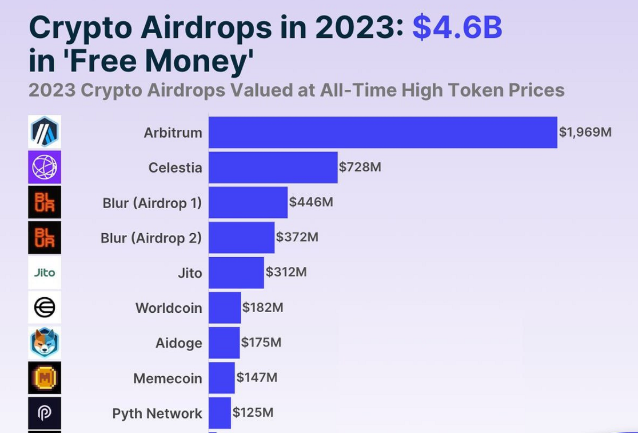
Here’s how much money was dropped in Airdrops in 2023. It was a downtrend year, so there weren’t as many projects.
How Does the Money Get to My Account?
A lot of people are confused about how the money from these projects ends up in their VND account, so I’ll break it down step by step.
- When you do the tasks, projects usually give you points. Later, they use those points to figure out how much reward you’ll get. For example, sharing on social media might get you 5 points, and other tasks add more points.
- Once the project wraps up and hits the TGE (Token Generation Event—the first time they release the token), they’ll distribute tokens to your wallet address based on the points you earned.
- At TGE, projects team up with exchanges like Binance, Bybit, or OKX to get their tokens listed so users can trade them. (For example, if a project has a token called $DA, it might get listed on Binance as $DA/USDT, or other pairs like $DA/BTC or $DA/USDF.)
- Before the token gets listed, projects usually let Airdrop participants “claim” their tokens (grab the tokens or digital assets) into their wallets. Once you’ve got the tokens, check which exchanges the project will list them on. A project might get listed on multiple exchanges, and based on my experience, I’d pick one where I can sell at a higher price.
- When the project announces the token listing, the exchange opens deposit gates so users can send their tokens to the platform for trading. After claiming your tokens in step 4, they’ll be in your wallet. Then, you send those tokens to the exchange. At the scheduled listing time (which they announce ahead of time), you can go in and sell your tokens on the exchange. After selling them for $USDT, you can use the exchange’s P2P feature to cash out $USDT into VND.
- P2P means you’re selling to another user through the exchange as a middleman. For example, I’ve got a Binance account, and you’ve got one too. I want to buy some USDT with VND to trade and make a profit. You’ve got USDT you want to sell for VND. The exchange handles the deal between us. I send you money through a bank transfer, and the exchange deducts the USDT from your Binance account and sends it to mine. The trade’s safe as long as you confirm you’ve received the money—then the exchange releases the $USDT from your account. If someone tries to scam, the exchange steps in and asks for proof to sort it out. (Basically, no one’s getting ripped off.) So, if you’re doing Airdrops, you absolutely need exchange accounts. Check out this guide to signing up for exchanges here.
Benefits and Risks of Joining Airdrops
Benefits:
- Free money: You don’t need to invest anything—just do tasks to get tokens.
- If you get lucky, it could change your life. I’ve met people who’ve made billions or tens of billions VND from a single project. (I know a guy who’s a factory worker—works all day, then grinds Airdrops at night. After two years, he hit a project that made him over 5 billion VND and totally turned his life around.)
- Learn more about crypto: Doing Airdrops means you’ll deal with stuff like adding liquidity, transferring funds, receiving payments, swapping, bridging, trading, staking, and more. You’ll get a deeper understanding of tokens and what they’re good for. If you want to invest and make a profit, this knowledge helps you analyze tokens you’re interested in. Without that deep understanding, you’re usually just going off rumors about certain tokens or falling for hype from projects. Keep in mind that hype or rumors often lead you to buy at the top. If you invest without really getting it, you’re likely to lose money. You might make some cash at first, but in the end, you’ll probably give it all back.
Risks:
- Scam Airdrops: Some Airdrops are set up just to trick you and steal your money. Be super careful about putting money into any project.
- Worthless tokens: A lot of projects flop, and their tokens can’t be sold.
- High transaction fees: Some blockchains, like Ethereum, charge hefty gas fees when you deal with the tokens you get.
In short: Doing Airdrops is pretty safe with low risk. If something goes wrong, you’re just out some time, not your investment money. Losing effort feels way lighter than losing cash to me. Sure, that effort could’ve earned you money if you’d spent it working a regular job, but making money isn’t easy—you’ve got to accept some risks. On the flip side, if you stick with it and get lucky, you could score a big payout.
Among my friends who did Airdrops in 2024, the lowest earner made about 20k USD for the year—that’s around 500 million VND. Split that over 12 months, and I think it’s a pretty solid income. One lucky guy went all in on the $OM Airdrop and pulled in 130k USDT, which is close to 3 billion VND from just that one project.
Tools to Help with Airdrops
Doing Airdrops doesn’t need a ton of tools. I’ll go over some must-haves and a few optional ones that aren’t required but can save you a lot of time if you’ve got them.
Must-Have Tools
- A computer for Airdrops: If you’ve already got one, just use it. If you’re thinking of buying one, check out this article before you do.
- Social media accounts: Since most tasks involve liking or sharing on social media, you’ve got to have these. The essentials you need are X (Twitter), Discord, Telegram, and Gmail. There are also some others you might need once in a while, like Facebook, Instagram, or GitHub.
- Crypto wallet: A crypto wallet is super important for Airdrops. Projects sometimes check your wallet activity before sending rewards, and it’s where they’ll send your tokens. Be extra careful with your crypto wallet—it’s something you’ll use for tons of projects and long-term. The more you use it, the more credible it gets. For now, just set up a basic one like OKX Wallet or Metamask. I personally think OKX is more convenient. Check out this link to download crypto wallets here.
- A small amount of money for some projects that require gas fees (on-chain fees for doing tasks).
Optional Tools Beyond the Essentials
These tools aren’t must-haves, but they can make your work a lot easier if you’ve got them.
- Proxy
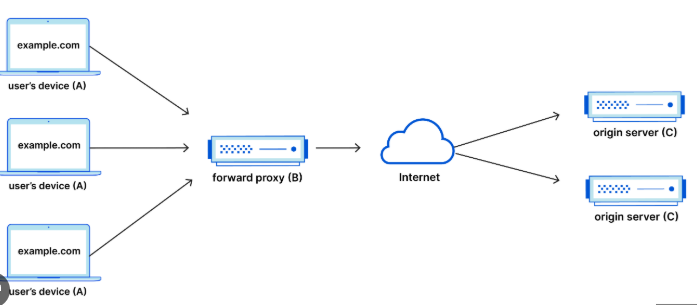
A proxy is a tool to change your computer’s IP address. Why bother? Because if you only use one wallet per project, you’re wasting a lot of time. You should grind multiple wallets to make more money. But projects don’t like that—if you do everything on one computer, they can easily spot it and might only send rewards to one wallet or none at all. A proxy changes your IP for each wallet, letting you bend the rules and use multiple wallets to earn more.
- Browser emulator tool
Besides a proxy, you might want a browser emulator to make it harder for projects to track you. For example, this tool can make one account look like it’s using Google Chrome on Windows 11, while another looks like it’s on Firefox. Pair it with a proxy, and it’s like each account is on a totally different computer. Some tools even sync accounts—so when you do something on your main account, the others copy it automatically. Airdrops can get boring with all the repetitive tasks, so this feature saves me a ton of time.
Key Things to Keep in Mind When Doing Airdrops
- Never share your private key: Don’t give your private key to anyone. Only share your public wallet address.
- Check the project’s background: Only join Airdrops from legit projects. You can grab opportunities from this website since I’ve already vetted them—it’ll save you a bunch of time.
- Use a secondary wallet: For all your Airdrop wallets, use a secondary one. Don’t use a wallet with a lot of money in it to avoid risks from sketchy projects.
- Stay updated: Keep checking this website regularly. I’ll keep posting updates on all the projects here.
In this article, I’ve just covered the basics and essentials to get started. How you actually do it depends on each project, and I’ll give detailed guides for each one. Make sure to follow the cayairdrop.com website regularly for project updates. Also, join the other cayairdrop info channels too!